
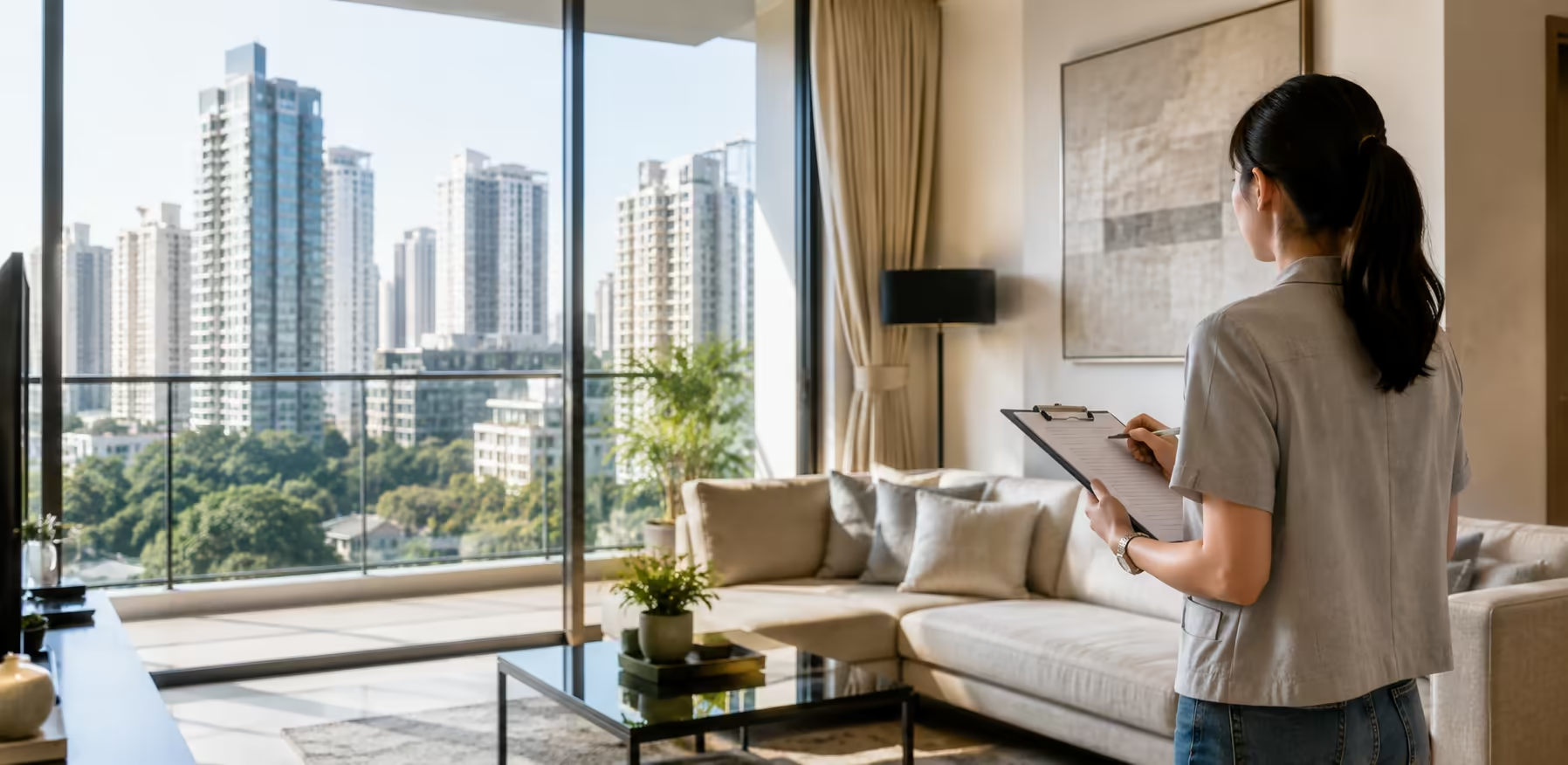
A condo may look impressive in photographs but feel very different once you visit it in person.
Fresh paint, attractive furniture and a beautiful swimming pool can easily distract you from issues such as poor water pressure, noisy air conditioners, weak mobile reception, limited visitor parking or a difficult daily commute.
A proper condo viewing is therefore more than a quick walk through the living room and bedrooms. It is your opportunity to understand how comfortable, convenient and practical the property will be once you move in.
This Kuala Lumpur condo viewing checklist covers 25 important things to inspect before you agree to rent a unit.
Already decided where you want to live? Read our [step-by-step guide to renting a condo in Kuala Lumpur] to understand the broader rental process, from searching for a property to signing the tenancy agreement and moving in.
Before You Attend the Condo Viewing
Prepare a few simple items before visiting the property:
- A mobile phone with a working data connection
- A phone charger for testing electrical sockets
- A measuring tape
- A list of your essential furniture
- Notes containing your questions for the owner or agent
- A camera or your phone for documenting defects
- Your expected work, school or university travel times
Try to arrange the viewing during daylight hours. Natural light makes it easier to spot stains, cracks, damaged flooring and signs of water leakage.
For a property you are seriously considering, it is also worth returning to the area during your normal commuting time. A route that appears easy on a quiet weekend may feel very different during a weekday morning or evening.
Location and Building Checks
Test the Actual Commute
Do not evaluate a condo based only on the distance shown on a map.
Check the complete journey from the building to your workplace, university, school or other places you visit regularly. Include:
- Walking time to the nearest MRT or LRT station
- Waiting and interchange time
- Peak-hour traffic
- Petrol and toll costs
- Office or university parking charges
- Ride-hailing availability
- The walking route from the station to the condo
A condo described as being “near an MRT station” may still require a long walk, a feeder bus or an uncomfortable route without proper pedestrian access.
For families, test the journey to school during the actual morning drop-off period. For office workers, check the route during weekday peak hours rather than relying entirely on an estimated travel time.
Visit the Surrounding Area at Different Times
The neighbourhood may feel peaceful during an afternoon viewing but become busy or noisy in the evening.
Look at the surrounding area and consider:
- Traffic near the condo entrance
- Nearby construction sites
- Restaurants, bars or entertainment venues
- Schools and morning traffic
- Rail lines and major roads
- Loading bays and commercial buildings
- Street lighting
- Pedestrian access
- Grocery and food options
- Noise during weekends
Walk around the immediate neighbourhood instead of only entering and leaving by car. This gives you a better idea of whether daily errands will be convenient without driving.
Inspect the Security and Entrance System
Ask the agent to demonstrate how residents enter the property.
Check whether the condo uses:
- Access cards
- Facial recognition
- Vehicle registration
- Security guards
- Intercom access
- Visitor registration
- Separate lift access by floor
- Digital visitor invitations
Also ask how food deliveries, couriers and visitors are handled. Some condominiums allow deliveries directly to the unit, while others require residents to collect items from the lobby or a designated collection area.
A secure system is important, but it should also be practical for your everyday routine.
Look at the Lobby, Corridors and Refuse Areas
The condition of the common areas can tell you a great deal about how well the building is managed..
Inspect:
- Lobby cleanliness
- Corridor lighting
- Damaged ceilings or walls
- Unpleasant smells
- Refuse-room cleanliness
- Signs of pests
- Water stains
- Loose tiles
- Broken doors
- Maintenance notices
A beautifully renovated unit may still be uncomfortable if the corridors, lifts and common facilities are poorly maintained.
Condominium common areas and building rules are normally administered through the developer, Joint Management Body or Management Corporation within Malaysia’s strata-management framework. Building standards and house rules therefore differ from one development to another, making it important to speak directly with the management office.
Check the Lifts
Lift problems can affect your daily life, particularly in high-rise buildings.
Ask:
- How many lifts serve the residential floors?
- Are there separate service lifts?
- Do all lifts appear operational?
- Is lift access controlled by floor?
- Is there a long waiting time?
- How are move-ins and large deliveries handled?
- Does management require lift padding or a refundable moving deposit?
Spend a few minutes observing the lift traffic instead of entering the unit immediately.
A building with many units but only a small number of functioning lifts may experience longer waiting times during mornings, evenings and weekends.
Inspect the Parking Bay and Vehicle Access
Do not accept “one parking space included” without seeing the actual bay.
Confirm:
- The exact bay number
- Whether the parking is covered
- Whether it is a normal or tandem bay
- Whether the bay is close to a lift
- Whether the space fits your vehicle
- Whether there are narrow ramps
- Whether motorcycle parking is available
- Whether there is visitor parking
- Whether additional parking can be rented
- Whether electric-vehicle charging is available
Some parking bays are located several floors away from the unit’s lift lobby. Others may be beside walls, pillars or narrow turning areas that make parking difficult.
Ask the agent to show you the full route from the entrance barrier to the parking bay.
Inside the Condo Unit
Check the Direction, Natural Light and Afternoon Heat
Open the curtains and switch off some of the lights to see how much natural light enters the unit.
Consider:
- Which direction the main windows face
- Whether direct afternoon sun enters the living room
- Whether bedrooms receive sufficient daylight
- Whether neighbouring buildings block the view
- Whether the unit feels unusually warm
- Whether curtains or blinds are included
- Whether the balcony provides shade
A bright unit can be pleasant, but strong afternoon sun may make some rooms noticeably warmer and increase air-conditioning use.
Visit during the afternoon when possible if heat is a concern.
Look for Water Stains, Leaks and Mould
Examine ceilings, walls, built-in cabinets and areas around windows.
Pay particular attention to:
- Bathroom ceilings
- Kitchen sinks
- Air-conditioning pipes
- Window frames
- Balcony doors
- Wardrobes against external walls
- Walls shared with bathrooms
- Areas beneath sinks
Warning signs include bubbling paint, discoloured ceilings, musty smells, black marks and swollen cabinet panels.
Ask what caused any visible stain and whether it has been permanently repaired. Repainting may hide the appearance of a leak without fixing its source.
Request that unresolved water leakage or mould be repaired before the move-in date and include the promise in writing.
Test the Doors, Windows and Locks
Open and close every door and window.
Check that:
- The main door locks correctly
- Bedroom doors close without scraping
- Sliding doors move smoothly
- Window handles are secure
- Balcony doors can be locked
- Bathroom doors are not swollen
- Built-in wardrobe doors function properly
- The letterbox key is available
Loose windows and poorly sealed balcony doors can allow rainwater, noise or insects into the unit.
Families with young children should also examine window openings, balcony doors and railing gaps carefully.
Inspect the Flooring and Tiles
Walk slowly through every room and look for:
- Cracked tiles
- Loose tiles
- Scratched timber flooring
- Water-damaged laminate
- Uneven surfaces
- Stained carpets
- Chips around corners
- Hollow-sounding floor tiles
Take photographs of existing damage before moving in.
Minor marks may not prevent you from renting the property, but they should be recorded in the inventory or handover report so that you are not blamed for them later.
Check the Balcony and Drainage
Inspect the balcony even when you do not expect to use it often.
Check:
- Whether the drain is blocked
- Whether water marks are visible
- Whether the floor slopes towards the drain
- Whether the railing feels secure
- Whether there are bird or pest problems
- Whether outdoor air-conditioning units are accessible
- Whether laundry drying is permitted
- Whether the balcony receives heavy direct rain
Ask whether there have been previous incidents of water entering the living room through the balcony doors.
Do not climb on railings or attempt to test anything unsafe during the viewing.
Notice Pests and Unusual Smells
Use more than your eyes when inspecting the unit.
Look and smell for signs of:
- Cockroaches
- Ants
- Termites
- Mosquitoes
- Rodents
- Drain odours
- Cigarette smoke
- Pet smells
- Musty wardrobes
- Cooking smells from neighbouring units
Check beneath sinks, inside kitchen cabinets and around rubbish-disposal areas.
A unit that has remained empty for some time may have dry drains or temporary odours, but persistent smells should be investigated before you commit.
Internet, Mobile Reception and Noise
Test the Water Pressure
Turn on the taps in the kitchen and bathrooms.
Where possible, test more than one outlet at the same time to see whether the pressure drops significantly.
Check:
- Kitchen tap pressure
- Bathroom sink pressure
- Shower pressure
- Hot and cold water
- Water colour
- Unusual pipe noises
- Leaks beneath sinks
Water pressure can differ between buildings and sometimes between units on different floors.
Do not assume that an attractive shower fitting will provide good water pressure.
Test the Toilets and Drains
Flush every toilet and observe whether the water clears normally.
Run water into:
- Bathroom sinks
- Showers
- Kitchen sinks
- Yard sinks
- Floor traps
Watch for slow drainage, water collecting on the bathroom floor or unpleasant smells coming from floor traps.
Ask whether the owner will arrange plumbing repairs before the tenancy begins if anything is not working properly.
Check the Water Heaters
Confirm which bathrooms have hot-water systems and test them where possible.
Check:
- How quickly the water becomes warm
- Whether the heater makes unusual noises
- Whether the controls work
- Whether the shower head leaks
- Whether the water temperature remains stable
- Whether there is a central or individual heating system
Ask who is responsible for repairing or replacing a faulty water heater during the tenancy.
The agreed repair responsibilities should be written into the tenancy agreement rather than based only on a verbal understanding.
Run Every Air Conditioner
Turn on each air-conditioning unit and allow it to operate for several minutes.
Check:
- Whether the room becomes cooler
- Whether the unit makes excessive noise
- Whether water drips from the indoor unit
- Whether the remote control works
- Whether there is an unpleasant smell
- Whether all fan-speed settings function
- When the units were last serviced
Ask whether the air conditioners will be serviced before you move in.
You should also clarify whether regular servicing is the tenant’s responsibility and who pays when a unit requires a major repair or replacement.
Test the Lights and Electrical Sockets
Switch on the lights and ceiling fans in every room.
Use a phone charger to test easily accessible sockets, but do not open electrical covers or attempt any technical inspection yourself.
Check whether there are enough power points near:
- The bed
- The television area
- The work desk
- The kitchen counter
- The washing machine
- The refrigerator
- The internet-router location
Look for loose switches, damaged socket covers, flickering lights or visible burn marks.
Any electrical defect should be reported and professionally repaired before occupancy.
Test the Included Appliances
A fully furnished listing does not automatically mean that every appliance is working properly.
Ask to test the:
- Refrigerator
- Freezer
- Washing machine
- Dryer
- Microwave
- Oven
- Cooker hob
- Kitchen hood
- Television
- Ceiling fans
- Dishwasher
- Water dispenser
Confirm which appliances will remain in the unit and whether the owner intends to remove or replace anything shown during the viewing.
Ask what happens if an older appliance fails through normal use. The tenancy agreement should clearly describe the repair arrangement because the rights and responsibilities of the landlord and tenant depend heavily on the agreed terms.
Internet, Mobile Reception and Noise
Check the Mobile Signal Inside Every Room
Do not test mobile reception only in the living room.
Check your signal in:
- The bedrooms
- The kitchen
- The study area
- The balcony
- The bathrooms
- The parking area
- The lift lobby
Make a short call or run a mobile-data speed test if connectivity is important for your work.
High-floor units, internal rooms and units surrounded by other towers may have different reception conditions.
Confirm Fibre-Internet Availability for the Exact Unit
This is especially important for remote workers, digital nomads, students and anyone who regularly attends online meetings.
Ask:
- Which internet providers serve the building?
- Is there an existing fibre connection?
- Where is the router point?
- Does the owner already have an active contract?
- Can you register the service in your name?
- Are there installation restrictions?
- How long might activation take?
- Is mobile broadband a practical backup?
Check coverage using the exact building address and unit details rather than assuming that every development in the neighbourhood has the same service.
Both Unifi and TIME provide address-based coverage checks, and Unifi notes that a coverage result does not guarantee immediate availability at a particular address.
Listen for Noise and Check Privacy
Stand quietly in each room for a few moments.
Open and close the windows to compare the noise level.
Listen for:
- Road traffic
- Trains
- Construction
- Neighbouring units
- Lift machinery
- Water pumps
- Children’s play areas
- Swimming-pool activity
- Loading bays
- Refuse collection
- Air-conditioning compressors
Check whether the bedroom shares a wall with a lift shaft, refuse room, service area or neighbouring living room.
Also look at the distance between your windows and the next building. A unit with a beautiful interior may offer very little visual privacy once the curtains are open.
Furniture, Rules and Rental Arrangements
Confirm the Furniture and Inventory
Ask for a written list of everything included with the unit.
The inventory may cover:
- Beds and mattresses
- Sofas
- Dining furniture
- Curtains and blinds
- Televisions
- Kitchen appliances
- Washing machines
- Air conditioners
- Wardrobes
- Decorative items
- Keys, remotes and access cards
Do not assume that staging furniture belongs to the property.
Take dated photographs of the unit’s condition during handover and ensure that major scratches, stains, chips and damaged items are recorded.
An accurate inventory protects both the tenant and the landlord when the tenancy ends.
Check the Storage and Practical Layout
Imagine living in the unit rather than only viewing it.
Ask yourself:
- Is there enough wardrobe space?
- Where will luggage be stored?
- Is there space for cleaning equipment?
- Can your existing furniture fit?
- Is there a suitable work-from-home area?
- Can the kitchen hold your groceries and cookware?
- Is there a proper laundry area?
- Are there enough sockets near the desk and bed?
- Can doors open fully without hitting furniture?
A larger unit is not necessarily more practical. A well-designed smaller condo may provide better storage and more usable space.
Measure important areas when you already own large furniture or need space for a home-office desk.
Ask About Condo Rules and Facilities
Do not assume that all advertised facilities are available without restrictions.
Ask management about:
- Swimming-pool operating hours
- Gym access
- Facility-booking charges
- Tennis or badminton court reservations
- Temporary facility closures
- Guest limits
- Pet rules
- Short-term rental restrictions
- Smoking rules
- Parcel-delivery arrangements
- Moving hours
- Renovation rules
- Access-card charges
- Lost-card replacement fees
Visit the facilities rather than relying only on listing photographs. Check whether the gym equipment works, the pool area is maintained and the facilities are convenient to reach from the unit.
House rules can be changed or enforced by the relevant building-management body, so obtain current information from the management office whenever a rule is important to your decision.
Confirm Costs, Repairs and Handover Conditions in Writing
Before agreeing to rent the condo, request a complete breakdown of the expected payments and responsibilities.
Confirm:
- Monthly rent
- Security and utility deposits
- Advance rent
- Tenancy-agreement and stamping costs
- Parking charges
- Additional access-card charges
- Internet charges
- Utility-account arrangements
- Moving deposits
- Professional-cleaning requirements
- Air-conditioner servicing
- Minor-repair responsibilities
- Major-appliance repair responsibilities
- Move-in date
- Repairs to be completed before move-in
- Furniture to be added or removed
- Inventory and handover procedure
- Deposit-refund terms
Ask whether the electricity account will remain under the owner’s name or be transferred to the tenant.
Tenaga Nasional Berhad provides a Change of Tenancy process for an existing property, allowing the registered electricity account to be placed under the tenant’s name where appropriate. The owner and tenant should agree on the arrangement before move-in.
Verbal promises can easily be forgotten. Repairs, furniture replacements, cleaning and other agreed conditions should therefore be recorded in the tenancy agreement, offer letter, inventory or another written document accepted by both parties.
Condo Viewing Red Flags
Think carefully before proceeding when you notice any of the following:
- Pressure to transfer money immediately
- Refusal to show the actual unit
- An agent who cannot explain who owns the property
- A payment account that does not match the agreed recipient
- Major water stains covered with fresh paint
- Persistent mould or sewage smells
- Several broken appliances
- Unresolved electrical problems
- The owner refusing to document existing damage
- Promised repairs that will not be confirmed in writing
- Unclear internet or utility arrangements
- Restrictions that conflict with your lifestyle
- An inventory that does not match the actual unit
- Rental terms that change repeatedly during discussions
A competitive rental market should not prevent you from carrying out basic checks.
It is usually better to lose a unit than to enter a tenancy without understanding its condition, costs and rules.
Quick Condo Comparison Scorecard
When viewing several properties, score each condo from one to five.
| Category | Score |
|---|---|
| Daily commute and location | /5 |
| Building maintenance and security | /5 |
| Unit condition | /5 |
| Water, electricity and appliances | /5 |
| Internet and mobile reception | /5 |
| Noise, natural light and privacy | /5 |
| Facilities, parking and condo rules | /5 |
| Owner or agent responsiveness | /5 |
| Rental terms and total cost | /5 |
| Total | /45 |
Add notes beside each score. This helps you compare properties based on daily practicality rather than appearance alone.
Questions to Ask the Owner or Property Agent
Before leaving the viewing, ask:
- Why is the current tenant moving out?
- How long has the unit been available?
- Are there any known water-leakage or plumbing problems?
- When were the air conditioners last serviced?
- Which internet providers serve this exact unit?
- Which furniture and appliances are included?
- Will the unit be professionally cleaned before move-in?
- Which repairs will be completed?
- Who pays for minor and major repairs?
- Are pets permitted?
- How many parking bays are included?
- Are there additional monthly charges?
- How are electricity and water accounts handled?
- What are the move-in procedures?
- How many access cards and keys will be provided?
- Is early termination permitted under any circumstances?
- What is the deposit-refund process?
- Can all agreed repairs and replacements be recorded in writing?
The quality of the answers can tell you as much about the tenancy as the physical condition of the property.
What to Do After the Viewing
Do not make your decision while standing inside the unit.
After leaving:
- Review your photographs and videos
- Calculate the total move-in cost
- Test the commute
- Check internet coverage
- Read recent comments about the building
- Compare the unit with other available options
- Request written confirmation of promised repairs
- Review the tenancy terms carefully
- Verify who will receive your payment
- Keep copies of all messages and documents
- Why is the current tenant moving out?
- How long has the unit been available?
- Are there any known water-leakage or plumbing problems?
- When were the air conditioners last serviced?
- Which internet providers serve this exact unit?
- Which furniture and appliances are included?
- Will the unit be professionally cleaned before move-in?
- Which repairs will be completed?
- Who pays for minor and major repairs?
- Are pets permitted?
- How many parking bays are included?
- Are there additional monthly charges?
- How are electricity and water accounts handled?
- What are the move-in procedures?
- How many access cards and keys will be provided?
- Is early termination permitted under any circumstances?
- What is the deposit-refund process?
- Can all agreed repairs and replacements be recorded in writing?
For a property you are seriously considering, arrange a second viewing where possible. The second visit often reveals details that were overlooked during the first one.
Frequently asked questions
1. How long should a condo viewing take?
Allow approximately 30 to 45 minutes for a serious viewing. Larger units or properties with several facilities may require longer. Avoid rushing through the property in ten minutes, especially when you are preparing to sign a one-year or longer tenancy.
2. Should I view a condo during the day or at night?
A daytime viewing is better for checking natural light, water stains, flooring and the general condition of the unit. An evening visit can help you assess traffic, security, lift waiting time, parking availability and neighbourhood noise. For a shortlisted unit, visiting at two different times provides a more complete picture.
3. Should I pay a booking fee during the viewing?
Do not transfer money merely because someone says that another tenant is interested. First verify the property, the person collecting the payment, the payment purpose, the written refund conditions and the documents you will receive. Keep a record and receipt for every payment.
4. Should I photograph defects before signing?
Yes. Photograph visible damage and ensure that important defects are included in the inventory, handover report or tenancy documents. Take another complete set of dated photographs when you receive the keys.
5. Is a fully furnished condo always the better choice?
Not necessarily. A furnished unit can reduce your initial setup costs, but older furniture and appliances may create repair issues. An unfurnished or partially furnished property may suit you better when you already own furniture or plan to remain in Kuala Lumpur for several years. Compare the condition and usefulness of the furnishings rather than simply counting how many items are included.
6. Who is responsible for repairs?
Repair responsibilities should be stated in the tenancy agreement. Ask specifically about air conditioners, water heaters, appliances, plumbing, electrical faults and damage caused by normal wear. Do not rely solely on assumptions about what landlords or tenants “normally” pay.
7. How can remote workers check whether a condo has good internet?
Check fibre availability for the exact unit, inspect the router point and test your mobile connection inside the rooms where you plan to work. Ask current occupants or management which providers are active in the building. A mobile hotspot can be useful as a backup, but test the signal before relying on it.
Final Thoughts
Choosing the right Kuala Lumpur condo involves more than finding an attractive unit within your rental budget.
The building’s management, water pressure, internet availability, noise level, parking arrangement, commute and repair terms can all affect your daily experience.
Take your time during the viewing. Test what you can, ask direct questions and record important agreements in writing.
A careful 30-minute inspection can help you avoid months of inconvenience after moving in.
Next step: Read our [How to Rent a Condo in KL: Step-by-Step Guide for New Residents] for guidance on the full rental process.
Looking for a home in Kuala Lumpur?
Tell us your preferred location, monthly budget, workplace and school requirements. Living Kuala Lumpur can help you compare suitable neighbourhoods and available properties.
Explore Properties in Kuala Lumpur
WhatsApp Us For More InfoProperty prices, rental estimates, commute times, population figures, and lifestyle data are provided for general reference only and may vary over time. While we strive to keep the information accurate and up to date, some details may be estimated and should not be considered as professional, legal, financial, or real estate advice.
This article provides general property-viewing and relocation information. Rental conditions, building rules, utility arrangements and tenancy terms vary between properties. Review the relevant documents carefully and obtain professional legal or property advice where necessary.